- 0-7547-7101-5
- law.walailak@gmail.com
- Mon - Fri: 8:30 - 16:30

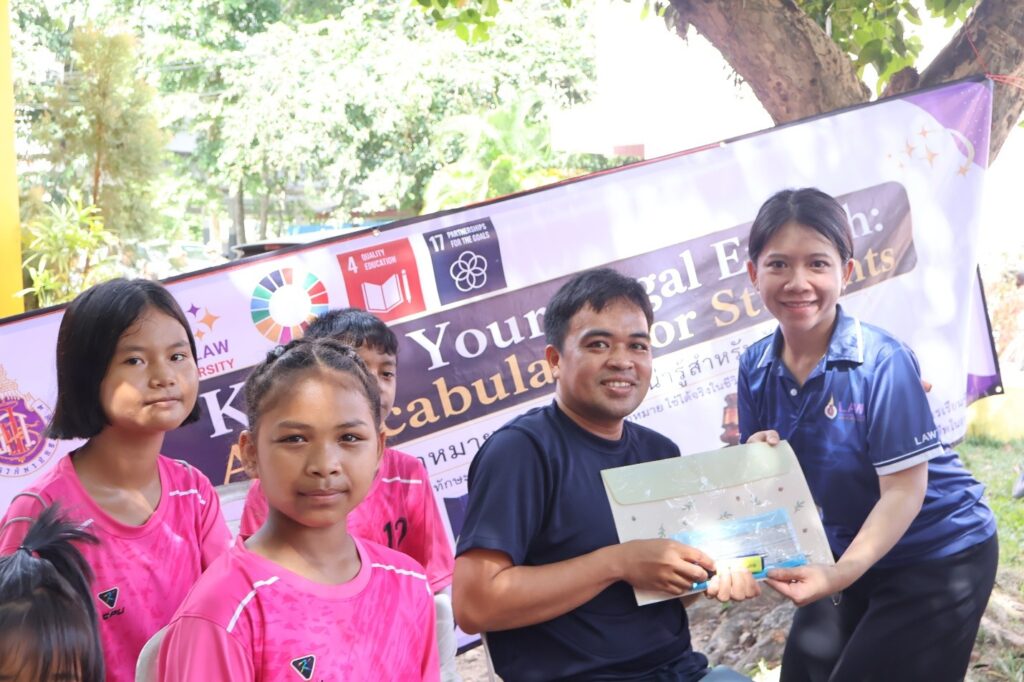
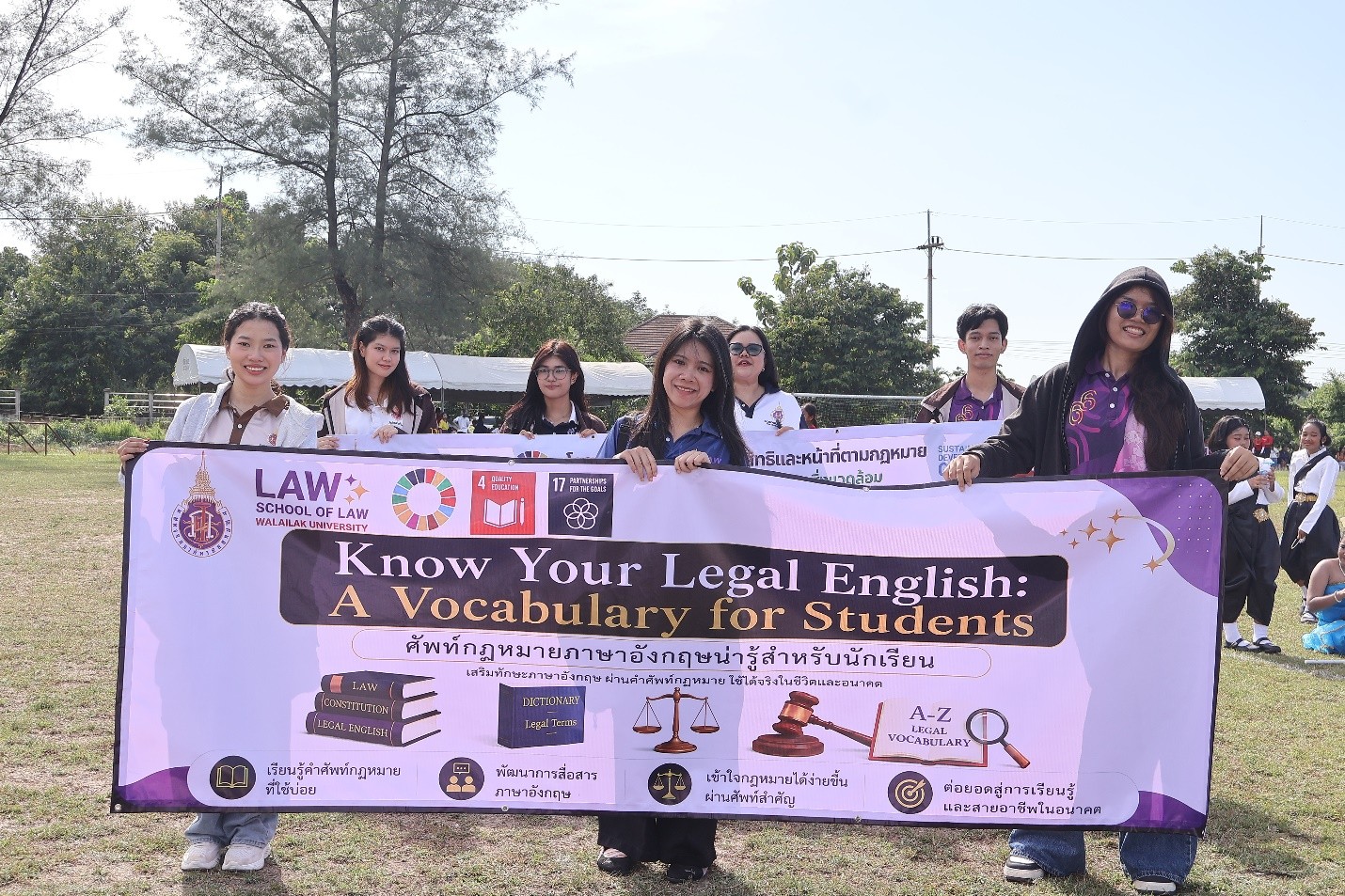
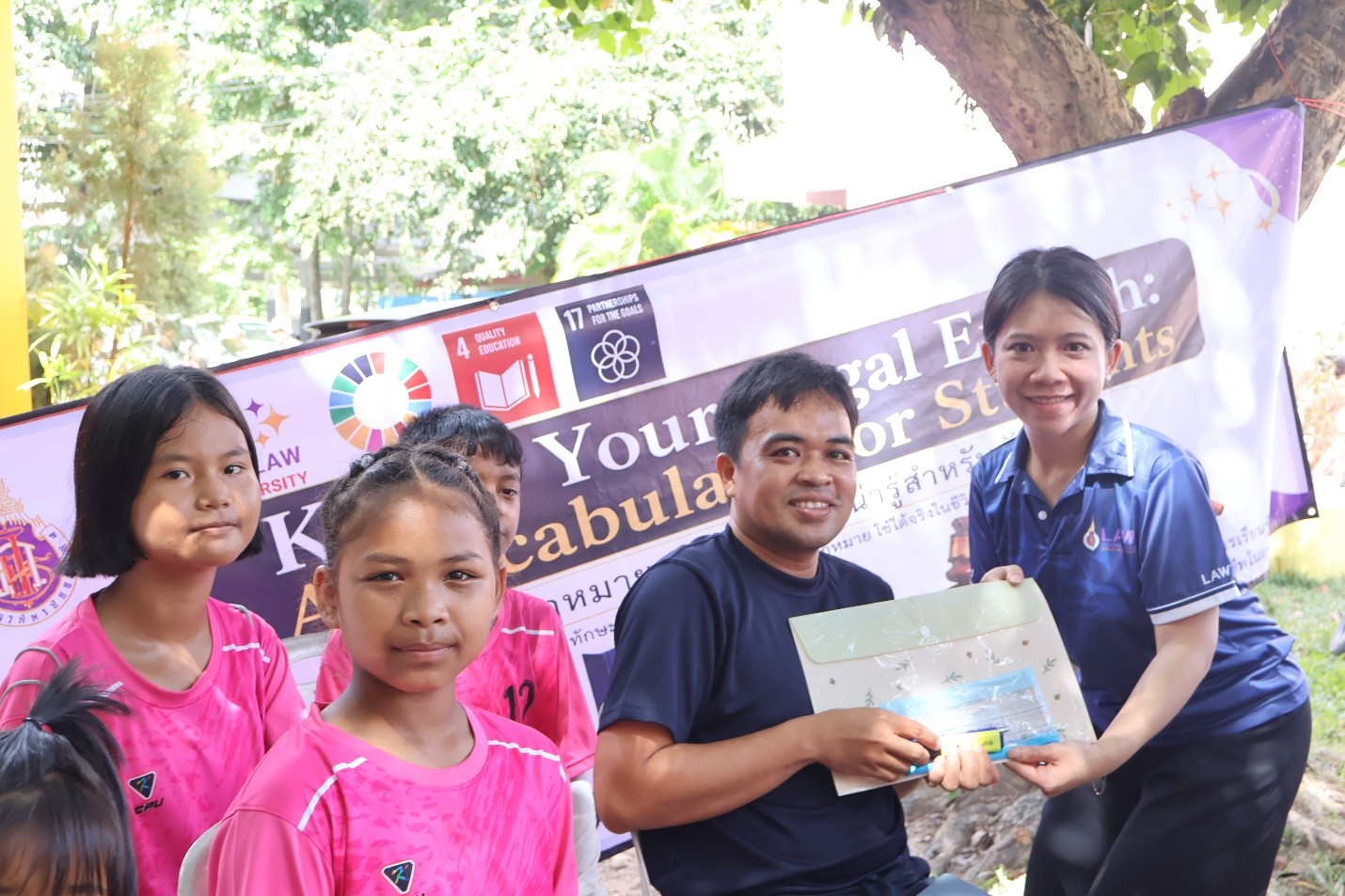
On 23 July 2026, the School of Law, Walailak University, led by Lecturer Nittaya Limrueangkul, together with students from the Bachelor of Laws Program, conducted an academic service activity under the project “Know Your Legal English: A Vocabulary for Students” at Debsirin Nakhon Si Thammarat School, Nakhon Si Thammarat Province. The activity aimed to introduce secondary school students to basic English legal vocabulary and to raise their awareness of the importance of English as a tool for education and access to legal knowledge.
The activity was integrated with LAW63-366 English for Lawyers. Students enrolled in the course applied the knowledge gained in class to develop informational leaflets on English legal vocabulary for use during the activity. This enabled the law students to extend their classroom learning into academic service while developing their ability to communicate legal knowledge in a clear and accessible manner to members of the public.
During the activity, the law students used the leaflets to introduce English legal terms, explain their meanings, and demonstrate their use in contexts appropriate for secondary school students. Participants were encouraged to read and pronounce English vocabulary, practice speaking and interacting in English, and take part in question-and-answer games and vocabulary meaning quizzes.
These interactive activities made English legal vocabulary, which can be highly specialized and unfamiliar to school students, more engaging and accessible. Rather than relying solely on lectures, the activity encouraged active participation through listening, speaking, pronunciation practice, and games, in accordance with the active Learning approach adopted by the project.
At the same time, the outreach activity provided law students with a valuable learning experience beyond the classroom. Their role shifted from learners in the English for Lawyers course to facilitators and knowledge providers. They were required to adapt their knowledge of legal vocabulary and English to suit a younger audience while developing skills in communication, explanation, and teamwork competencies that are particularly important for legal professionals who must communicate with people from a wide range of backgrounds.
The “Know Your Legal English: A Vocabulary for Students” project seeks to equip school students with a basic understanding of English legal terminology, enabling them to better understand legal news and information and to recognize the importance of Legal English for their future studies. At the same time, the project aims to strengthen law students’ Legal English communication skills and their ability to transfer legal knowledge to the wider public.
Alignment with THE Sustainability Impact Ratings
The project contributes to SDG 4: Quality Education, which promotes access to quality education and learning opportunities. It is also aligned with the following indicators under the Sustainability Impact Ratings:
Overall, the activity represents an integration of teaching and learning, student skills development, and academic service to society. Law students gained practical experience through hands-on learning, while young participants were provided with opportunities to access legal and English-language knowledge that can be further developed in their future education.